

Proving Liability in a Wrongful Death Case
September 16, 2024
Ways To Prepare for a Personal Injury Lawyer Consultation
September 20, 2024
Facing the challenge of filing a cerebral palsy lawsuit can feel like stepping into an unfamiliar world. Families often juggle numerous responsibilities while caring for someone with cerebral palsy, and legal matters can seem like an additional burden. But it’s not just about paperwork; it’s about making choices that could profoundly affect your loved one’s future.
The legal process involves several layers, each with its own significance. Recognizing medical negligence, for instance, stands as a pivotal point in your journey. By breaking down each stage into digestible parts, we aim to equip you with the knowledge and confidence you need to navigate the process. From initial consultations to courtroom procedures, we will unpack each aspect with clarity and empathy.
Ultimately, this guide serves as a resource to help you advocate for your family’s rights by filing a cerebral palsy lawsuit. Through insights and practical advice, you’ll find yourself better prepared to secure justice and the support your loved one deserves.
Understanding Cerebral Palsy and Its Causes
Cerebral palsy, a lifelong condition affecting movement and coordination, often stems from brain damage prior to or during birth. Common causes include:
- Oxygen deprivation
- Infections during pregnancy
- Medical negligence
Understanding these causes helps determine responsibility and the potential for legal action.
For parents, the first step involves gathering comprehensive medical records and consulting with specialists who can identify signs of malpractice. Detailed medical documentation frequently offers powerful evidence to support a claim.
By pinpointing where the standard of care fell short, families can take the first step toward holding responsible parties accountable. This foundational knowledge empowers families while laying the groundwork for a strong legal case.
Evaluating Your Case
You’ll need to examine both the medical and legal perspectives as you move forward with your lawsuit. Consult a cerebral palsy birth injury lawyer who understands how these cases tend to work. This expert will review medical records, assess the timeline of events leading to the condition, and gather expert opinions to build a robust case.
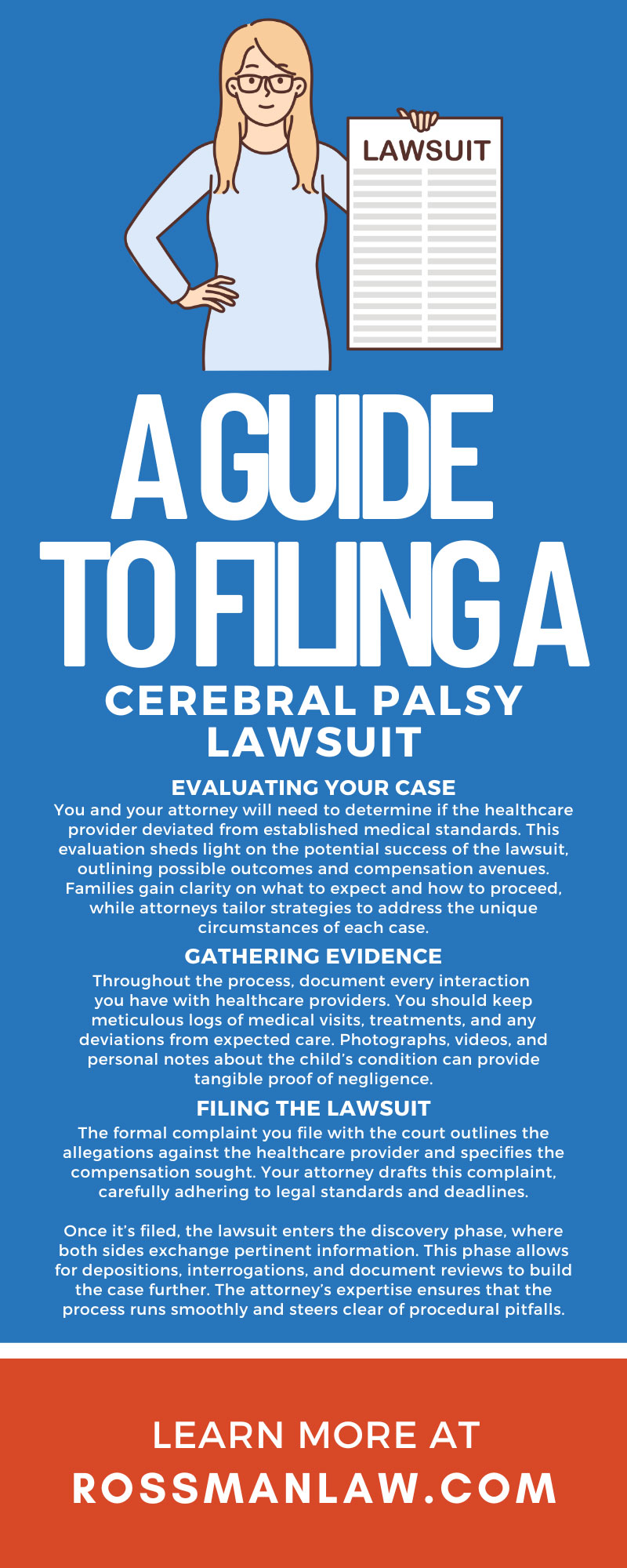
You and your attorney will need to determine if the healthcare provider deviated from established medical standards. This evaluation sheds light on the potential success of the lawsuit, outlining possible outcomes and compensation avenues. Families gain clarity on what to expect and how to proceed, while attorneys tailor strategies to address the unique circumstances of each case.
Gathering Evidence
Ready to gather comprehensive evidence for your case? Collect all your relevant medical records, obtain witness statements, and secure expert testimonies as necessary.
Throughout the process, document every interaction you have with healthcare providers. You should keep meticulous logs of medical visits, treatments, and any deviations from expected care. Photographs, videos, and personal notes about the child’s condition can provide tangible proof of negligence.
Your attorney will play a key role in organizing this information and making sure that the evidence aligns with legal requirements. Through this detailed collection, the case gains substance and credibility, increasing the likelihood of a favorable outcome.
Filing the Lawsuit
The formal complaint you file with the court outlines the allegations against the healthcare provider and specifies the compensation sought. Your attorney drafts this complaint, carefully adhering to legal standards and deadlines.
Once it’s filed, the lawsuit enters the discovery phase, where both sides exchange pertinent information. This phase allows for depositions, interrogations, and document reviews to build the case further. The attorney’s expertise ensures that the process runs smoothly and steers clear of procedural pitfalls.
Navigating the Legal Process
Let’s take a closer look at the legal process to prepare you for each phase.
Discovery
As mentioned, the discovery phase involves gathering evidence, interviewing witnesses, and analyzing expert testimonies. Your attorney will guide you through depositions, document exchanges, and negotiations.
Preparing Arguments
As trial preparations begin, the focus shifts to assembling a compelling argument supported by facts and testimonies. Getting ready for trial also involves strategizing on how to counter defenses and highlight the impact of negligence on your child’s life.
Throughout this process, maintain clear communication with your legal team to remain informed and involved. Knowing what to expect at each stage of the lawsuit helps you stay focused on the goal—achieving justice.
Trial and Settlement
Trials can be intense, but they’re not a foregone conclusion with a lawsuit. Plenty of lawsuits are resolved through settlements. Settlement talks may occur at any stage, offering a quicker resolution and avoiding the unpredictability of a trial. An experienced attorney negotiates on your behalf, aiming for a settlement that adequately addresses your child’s needs.
If the case does proceed to trial, your legal team presents evidence and arguments to a judge or jury, illustrating both the extent of the negligence and its lasting effects. While the trial can be lengthy, it also provides a platform for you to tell your family’s story and seek reparation. The outcome, whether through trial or settlement, aims to secure the resources necessary for your child’s care and future needs.
Understanding Post-Trial Considerations
After the trial or settlement, several steps ensure the implementation of the court’s decision. If the defendant challenges the verdict, the appeals process may come into play. Your attorney oversees these proceedings and will take care to guide you through additional legal requirements.
Alternatively, collecting and distributing settlement funds involve another layer of legal and financial management; after all, this compensation will help support your child’s ongoing care. Armed with a legal victory, your family can focus on providing the best possible environment for your child. The resolution marks a new chapter—one where past challenges are met with future opportunities for growth and healing.
Protecting Your Family’s Future
The resources you obtain from a successful case will support medical treatments, therapies, and adaptive equipment that enhance your child’s quality of life. Legal action also raises awareness about medical malpractice, which, in turn, contributes to improved standards of care.
By advocating for your child’s rights, you not only seek justice but also inspire change within the healthcare system. This proactive approach helps create a safer environment for others. Empowered by this journey, your family can face the future with confidence, knowing you have made a significant impact on your child’s life and the broader community.
Moving Into the Future
Filing a cerebral palsy lawsuit is both a legal journey and an emotional one, filled with challenges and opportunities for healing. This path demands resilience and courage as families seek justice for their loved ones. It’s more than a pursuit of compensation—it’s about validation and acknowledgment of the struggles endured.
Your decision to pursue legal action speaks volumes about your strength and determination to advocate for your child’s rights. Along this journey, you may discover a supportive community of other families who have walked similar paths, offering camaraderie and shared experiences that can ease the burden.
Remember, the outcome of your case can resonate beyond the courtroom. Your story can influence healthcare practices and potentially prevent future negligence. By standing up for your child, you contribute to a broader movement toward accountability and safety in medical care.