

What Happens if You Are Injured on Someone’s Property?
October 13, 2025
When Should You Retain a Personal Injury Attorney?
October 13, 2025
Life can change in the blink of an eye after an accident. What starts as a split-second event can unravel slowly, leaving emotional wounds that linger far beyond the physical recovery. More than just feeling shaken up or anxious for a few days, it’s about persistent struggles, like reliving the event, avoiding reminders, or feeling disconnected from life itself. These could be signs of post-traumatic stress disorder (PTSD), a condition that often hides in plain sight.
Understanding the symptoms of PTSD is the first step toward making sense of the emotional chaos that can follow an accident. Maybe it shows up as trouble sleeping, intense fear in certain situations, or constantly feeling on edge. Maybe it’s subtler, like withdrawing from loved ones or losing interest in things that once brought joy.
Let’s break down the signs and symptoms of PTSD that can follow a traumatic accident. Learn what to look for so you feel better equipped to take steps toward healing. Whether you’re seeking answers for yourself or someone close to you, this guide aims to offer clarity, understanding, and hope.
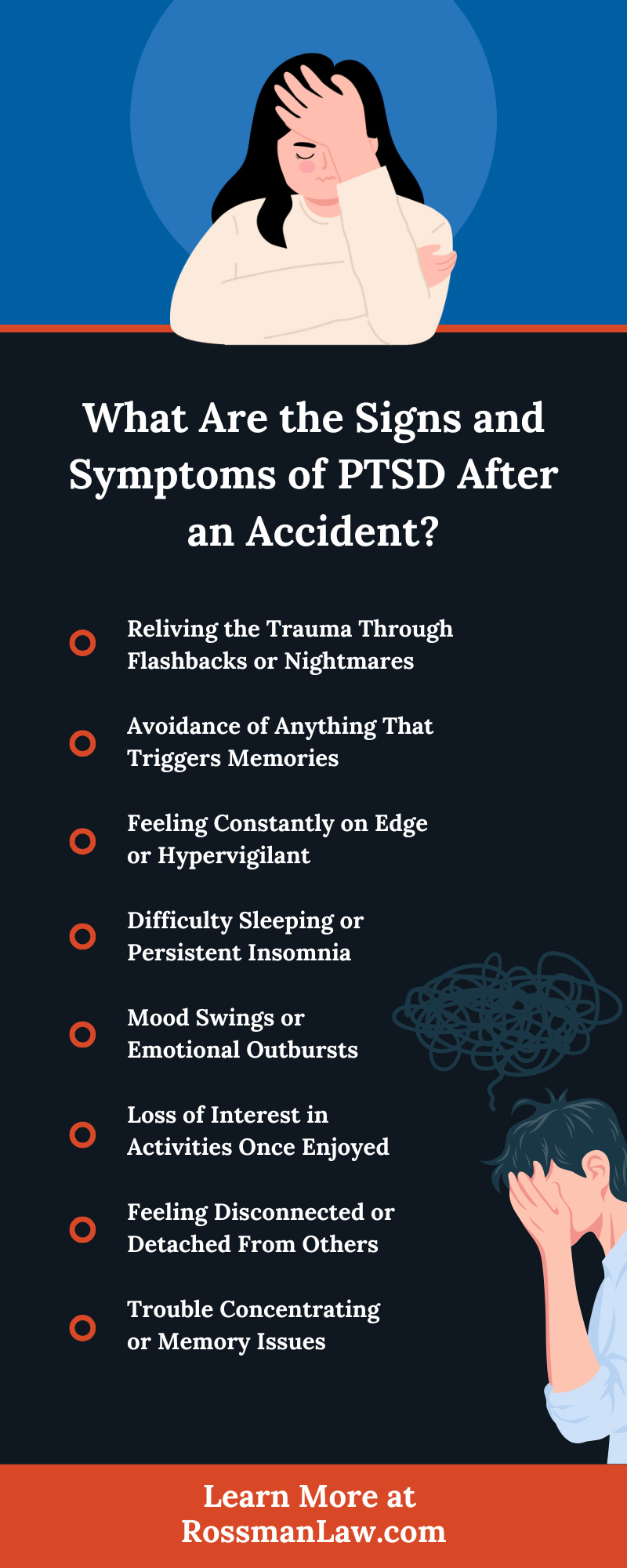
Reliving the Trauma Through Flashbacks or Nightmares
Vivid flashbacks and intense nightmares can feel like the accident is happening all over again. These episodes often come without warning and can happen at any time, triggered by sights, sounds, or even smells tied to the original event.
Flashbacks pull you into a state where your body reacts as if the danger is real. Your heart rate spikes, your breathing quickens, and it’s hard to snap out of it. Nightmares work in a similar way, leaving people feeling exhausted and on edge, even after waking up.
Avoidance of Anything That Triggers Memories
Many people with PTSD avoid reminders of their trauma. This might look like avoiding certain roads, skipping places where the accident happened, or even steering clear of conversations about it. It might start small, like sidestepping a street, but avoidance has a way of creeping into everyday life, limiting experiences and interactions.
Over time, avoiding triggers affects mental health, relationships, and even hobbies that once brought joy. It’s a way of trying to feel safe, but it often means living a smaller, more restricted life.
It’s important to have the right support system, like mental health professionals or trusted advocates. You should also readily seek resources from attorneys in Boise, Idaho, if legal matters overlap with recovery.
Feeling Constantly on Edge or Hypervigilant
The body’s response to trauma doesn’t always end when the event does. Hypervigilance, or the feeling of being constantly “on guard,” can linger long after an accident. It’s exhausting to live like this, always scanning for danger or feeling jumpy when anything unexpected happens. Noises might feel louder, sudden movements more alarming, and even small events can feel like threats.
Living with this heightened sense of alertness strains the body and mind. It can make it hard to relax, sleep, or enjoy quiet moments. If you’re stuck in this relentless state of readiness after an accident, understand that this is a common PTSD symptom. Look for ways to help your body and mind reset.
Difficulty Sleeping or Persistent Insomnia
Sleep becomes an uphill battle for people dealing with PTSD. It’s not just the nightmares but the restlessness that keeps sleep at bay. This lack of sleep often comes from an inability to “turn off” thoughts or the underlying feeling of being unsafe. The nights feel long, and the grogginess bleeds into the next day, affecting focus, mood, and productivity.
Waking up feeling more tired than before adds to the frustration, creating a cycle that feels impossible to escape. Over time, poor sleep takes a toll on mental and physical health, which weakens the body and intensifies other PTSD symptoms.
Mood Swings or Emotional Outbursts
Accidents and trauma can leave emotional scars that bubble up as sudden mood shifts. You might find yourself snapping at the smallest inconvenience or crying without understanding why. These unpredictable changes don’t have to be extreme to feel overwhelming. Even a constant sense of irritability or sadness can weigh heavily on daily life.
For loved ones, it might feel like walking on eggshells, but those with PTSD often feel just as frustrated by the lack of emotional control. These mood swings stem from deep feelings of fear, anger, or helplessness tied to the accident.
Loss of Interest in Activities Once Enjoyed
Trauma often creates a sense of detachment, making it difficult to find joy in things that once brought happiness. A hobby you used to love might feel meaningless. Social events you’d usually anticipate can seem like an overwhelming chore. This emotional numbness can leave you feeling isolated, even when surrounded by support.
Those around you might notice your change in engagement, which is a clear signal that your emotional energy is being consumed elsewhere. PTSD creates a focus on survival, pushing aside pleasure or leisure.
Feeling Disconnected or Detached From Others
After a traumatic event, it’s common to feel out of sync with the world. Friends and family might seem distant, or their concerns might feel trivial compared to the weight of what you’re carrying. Connection becomes difficult when it feels like no one can fully understand what’s happening in your mind.
This sense of detachment isn’t a sign of weakness or ungratefulness; it’s the mind’s way of protecting itself from further hurt. Over time, though, this distance can make it harder to seek help or even identify what you need. Building back connections takes time, but it starts with acknowledging that these feelings are a normal part of the healing process.
Trouble Concentrating or Memory Issues
PTSD impacts cognitive functions too. Concentration can become a challenge, even with simple tasks. Memory might feel unreliable, with forgetfulness becoming more frequent. This foggy state can stem from the brain’s ongoing focus on survival.
When danger signals dominate, other functions, like remembering or focusing, take a backseat. This might lead to frustration in daily tasks, especially work or school, where concentration is required.
Recognizing this symptom can provide relief in knowing it’s not just absentmindedness. Understanding that the brain is trying to process a traumatic event helps frame these struggles as part of the wider impact of PTSD.
What Next?
You might feel overwhelmed after an accident, but recognizing what’s going on beneath the surface is a powerful step toward healing. If you’ve noticed changes in yourself or someone you care about, understand those feelings and behaviors can open the door to support and relief. The signs of PTSD after an accident aren’t always obvious, but they deserve attention and compassion, not only from others but from yourself as well.
Healing takes time, but you don’t have to face it alone. Reaching out to professionals, leaning on loved ones, and prioritizing your emotional well-being can support you on your journey. Sometimes, addressing intangible traumas is the key to finding solid ground again.